
|
PHTA wins £multi-million funding for cleanrooms |

|
UK Government investment enables near-patient manufacturing of advanced biological medicines at PHTAPharmaceutical researchers and enterprises will soon be able to make advanced therapeutics such as mRNA vaccines for cancer in three new, dedicated commercial cleanrooms, coming soon to PHTA. The brand-new, £10.7m, 5,000 sq ft GMP (Good Manufacturing Practice) facility will allow researchers and industry partners to rapidly develop, test, and manufacture new therapies - including advanced therapy medicinal products (ATMPs) and vaccines – both for patient treatment and for clinical trials. Known as ‘near-patient’ biomanufacturing, PHTA’s facility will make ‘biologic’ therapies, from cells or cell components, which have much shorter shelf lives than tablets. Having this capability on hand will be a major boost for Birmingham’s clinical research facilities at the co-located Queen Elizabeth Hospital Birmingham. The investment will also accelerate the development of advanced cell and gene therapies and mRNA vaccines, which is already well underway in Birmingham. Alongside University Hospitals Birmingham NHS Foundation Trust, the University is leading Europe’s first trial of a personalised mRNA vaccine for pancreatic cancer – one of the most challenging types of cancer to treat. In this ground-breaking trial, vaccines are tailored to each individual patient's tumour, training their immune systems to recognise and destroy any cancer cells that remain after surgery to prevent recurrence. The new PHTA facility means the “tumour-to-vaccine” journey will be faster than ever before, speeding up treatment time for patients. Science and Technology Secretary Liz Kendall said: "PHTA's latest £10 million investment will pave the way for vital new medicines and life-saving vaccines, while creating new jobs that reinforce the West Midlands as a leading hub for life sciences innovation. "The three dedicated cleanrooms for clinical trial manufacturing will enable a faster response to future health emergencies, ensuring patients can benefit more quickly from innovation. The investment will also help in the fight against devastating illnesses, funding work on cutting edge cell and gene therapies. "Backing facilities like this and delivering against our Life Sciences Sector Plan shows how business and government are working together to deliver a more resilient, innovative health system that grows our local economies and improves lives." |
|
|

|
Revolutionising life-saving blood delivery: Samoco begins prototyping at PHTA MakerspaceHow do emergency medics get vital blood to critically-ill patients over significant distances, often in extreme heat, and with no reliable refrigeration?
That's the challenge Samoco is tackling from our Makerspace.
Their flagship smart blood transport device cools and agitates blood throughout its journey by road or drone, protecting it from bacterial growth and cell damage, and helping it reach patients faster. Manpreet Saggoo, co-founder and Head of Engineering, said: “Our mission is to revolutionise life-saving blood delivery and since joining PHTA, we’ve already been able to optimise our design in CAD and 3D print our very first prototype – backed by the design support and technical expertise offered by the Makerspace team. We’re very excited about the next stage of product development and are proud to be the first commercial users of this incredible space.” |
|
|
|
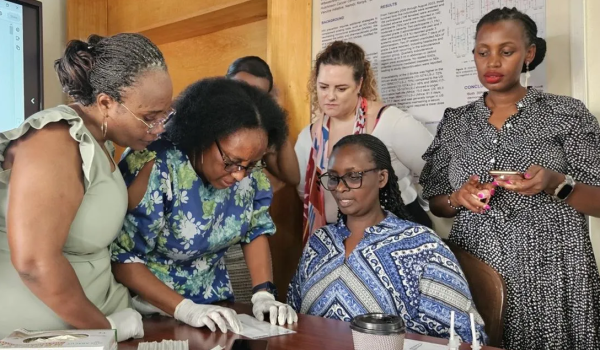
New saliva test for tetanus immunity set for evaluation in RwandaResearchers from Clinical Immunology Services (CIS) have developed a simple saliva test to identify tetanus immunity status in the Global South, which is currently being tested in Rwanda. Backed by £1.1m of Medical Research Council funding, researchers have worked with industry partner, Medtechtomarket, to create a low-cost, point-of-care lateral flow that enables immunity to be tested easily, quickly and without taking blood. Drs Jennifer Heaney and Sian Faustini of CIS recently visited colleagues at Kigali's Center for Family Health Research to demonstrate the test process. Over the next 12 months, researchers will assess how well the test works in real-life and how acceptable the test is among the local community and healthcare workers. |
|
|

|
|
Great science is only the starting point - commercial growth comes from getting the business basics right.
The PHTA Founder Growth Series is a practical workshop programme designed to support early-stage founders building their life science and healthtech businesses.
Across several engaging sessions, our expert trainer John Cooke will cover:
This series is about sustainable growth, delivered in a way that works for founders navigating research, funding, and customers.
All sessions are live on our website - attend one, all, or build a combination tailored to your own needs ⬇️ |
|
|
|
|
If you're establishing a life sciences business, initial start-up costs can escalate quickly.
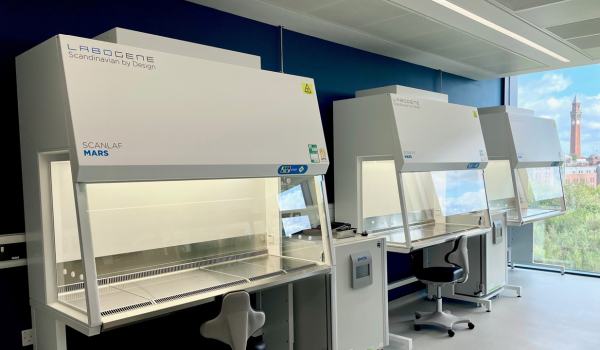
Our shared amenities - autoclaves, glasswashers and -80 °C and -150 °C freezers - are ready and waiting for you, meaning you don't have to invest in essential equipment before you can get to work.
And, if you need it, we've got high-quality lab equipment which can be added to your lab quotation on request:
👩🔬 Labogene ScanLAF Mars Class II biosafety cabinets ❄️ Small Liebherr under-bench fridge-freezer 🧊 Large PHCBi fridge and -30°C freezers Ready to find out more? |
