It has been one of the most keenly anticipated openings of any facility in the West Midlands for years, but the fact that the Precision Health Technologies Accelerator is now open for business provides a massive boost to both the region’s life sciences sector and its economy in general. Henry Carpenter reports for Birmingham Business.
It has not been without its setbacks, but the PHTA is now not just completed, but it is officially up and running.
This is big news for the region. It’s also a blessed relief for Professor Gino Martini who has been forced to draw on reserves of patience he probably didn’t realise he possessed. It’s fair to say that he’s now in the most chipper of moods.
Completion on the PHTA – the state-of-the-art facility occupying the top three floors of the first phase building at Birmingham Health Innovation Campus – took place in May, and its doors were formally opening to tenants as this edition was being printed.
“If I could summarise how I feel right now,” says Martini, “and combine it with my current focus, the six words I would choose are: excitement, excitement, excitement, delivery, delivery, delivery.”
It has been a long haul for Martini and his team, since he was taken on by PHTA’s owner the University of Birmingham to steer the project.
There have been – almost inevitably in this day and age – setbacks (a global pandemic and its aftermath don’t help), but what we now have is the largest, most significant accelerator in the UK for the life sciences industry, a 70,000 sq ft facility which is the anchor tenant of No. 1 BHIC.
“A bit like a toddler finding its feet, so will the PHTA,” says Martini. “And it will emerge as the region’s solution to scaling up large life science and healthcare SMEs which are of vital importance to the UK economy.”
The views – with the Queen Elizabeth Hospital, and ‘Old Joe’, rising above the University of Birmingham’s main campus, both within a few hundred yards – leave no doubt that this is a facility located firmly in the city’s medical and academic heartlands. This is important.

Step inside, and there is a thriving network of cutting-edge spaces to meet the needs of organisations and their practitioners, from branches of international corporations to small start-ups.
The Makerspace provides the opportunity for ideas to be tested and refined before going into production, with small-batch manufacturing and prototyping capabilities, and technology including 3D printing, in-silico design and VR.
Wet and dry laboratories have been designed by scientists for scientists and provide ample room for growing companies and spin-outs. All lab modules are within 40 metres of key shared amenities.
Then there are business incubation and flexible workspaces. The former provides access to specialist support, knowledge and facilities to allow business to scale up, including intellectual property protection.
The workspaces vary from virtual tenancy to hot desks and office space, with access to all BHIC amenities.
But this is before the human involvement – the clinical expertise, the talent pool, the commercial experience – which when combined with the environment is expected to create a world-class ecosystem.
One of Martini’s key lieutenants is Louise Stanley, the team’s comms manager who has been involved in the project from the start.
She makes the point that while the physical environment, and its positioning within the city, is one huge draw for current and prospective tenants, the importance of access to human resources is similarly appealing.
“Tenants aren’t just renting space,” she says. “At PHTA they are able to tap into the expertise of a thriving cluster of health excellence, infrastructure, clinical leadership and entrepreneurial skills.
“Gino often says he isn’t a landlord to our resident businesses, but a concierge – helping them to harness the power of existing partnerships between the NHS, academia, citizens and industry to deliver innovation in therapies, diagnostics and devices at pace and scale.
“What we’re trying to do is create a national and international resource where people come and work together.
“It’s about collaboration, with businesses of all sizes from the worlds of biopharma and medtech partnering with PHTA’s clinical-academic teams to integrate, analyse and interpret data sets and basic science.
“PHTA will allow our industry partners to rapidly develop, test and validate new products and services.”
Tenancy contracts were steadily increasing prior to opening, but its anchor tenant is emblematic of how an organisation can benefit from making this flagship research facility its home.
The University’s Clinical Immunology Services has signed up to occupy approximately 10,000 sq ft of the research facility.
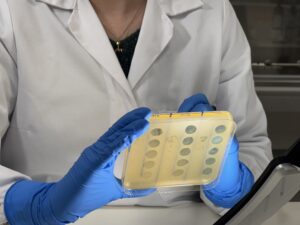
The CIS receives more than 100,000 blood, marrow, urine and other samples per year and, according to Stanley, it provides a comprehensive range of lab services to diagnose autoimmune and neuro-immunological conditions.
She adds: “The CIS is the only service of its kind to be embedded within an academic environment, creating a unique bridge between translational and clinical research groups, the NHS, and the pharmaceutical and bio-diagnostic industries.”

The PHTA became something of a labour of love for Martini, but his faith in what it could bring to the city and the wider economy was unshakeable.
A champion of the SMEs, and what they bring to wider economy, he says that they account for nearly two-thirds of total employment and around half of turnover in the UK private sector.
However, he believes that what is stagnating the growth of healthcare companies in the UK and particularly in West Midlands is access to high quality, category 2 laboratory and office scale-up space.
This former chief scientist of the Royal Pharmaceutical Society, experienced academic and industrial pharmacist who held senior positions at Scherer Drug Delivery Systems and SmithKline Beecham, has a better understanding than most on what is needed to turbocharge the industry.
“Without scale-up space, SMEs cannot grow, meaning that innovative companies leave the UK,” he says. “What happens is that patients suffer because they cannot access innovative treatments and both the UK and West Midlands economy also suffers.
“So we must hail this fantastic development. It has been an investment in excess of £60 million, and has been specifically designed to stop the leakage of innovative companies and highly skilled jobs overseas. Once fully developed, BHIC is estimated to generate £400 million GVA and 10,000 jobs to the local economy.
“But this development did not happen by itself. Many people have been involved from the beginning, such as Louise who is the longest serving member of the team.
“I would also like to acknowledge the rest of my team, some of whom are seconded in supporting this important endeavour – Natasha, Mark, Becky, Andrew, Shar, Rhys, Kay, Magda, Sallyann, Gianmarco, Richard and Dan.”
It’s little wonder there’s a buzz about the team.
As Martini says though, now it’s about delivery.
This article originally appeared in the Summer 2025 edition of Birmingham Business – read it here (p26-29).