For life sciences and medtech start-ups, finding the right lab space can be a defining decision. The right environment can help accelerate your research, attract talent and investors, and grow your business with confidence. The wrong one can create delays, raise costs and stall growth.
For early-stage companies, securing the right lab space early can be as important as raising capital. However, the UK is facing a critical shortage of space for research. With only 7,000 sq ft available in Cambridge and 25,000 sq ft in Oxford, against demand estimated at 850,000 sq ft, competition for quality lab space is intense.
Whether you’re launching a biotech venture, developing diagnostics, building health technologies or progressing translational research, here are the headline factors to bear in mind when renting lab space.
Establish your spec
The size of your team will partly determine the lab space you need – a good starting point is to allow 8m2 per person in office accommodation, and 15m2 per person in the lab itself.
But take a longer-term view too. Many start-ups outgrow their first space faster than anticipated, so your needs may change quickly if you’re increasing headcount. Find out what degree of flexibility is on offer – can you share occupancy in the early days? Is the lab benching fixed or modular? Is there space to install any specialist equipment you may need, and can the building accommodate the weight of this kit? Are there larger labs available that you could scale to?
Choose a space built for science
Not all commercial space is suitable for lab work. Converted or retrofitted offices can often seem more cost-effective, but may lack the infrastructure needed for specialist scientific activity – particularly when it comes to ventilation and extraction systems, waste handling routes, vibration management and biological safety.
Purpose-built lab spaces like PHTA – designed by scientists, for scientists – are functional and safe from day one, because essential considerations such as airflow, surface finishes, flexible furniture and the movement of people around the building have been built in from the outset.
Understand what’s included
When establishing a new life sciences business, initial start-up costs can escalate quickly. Look for lab facilities that offer essential amenities as part of the package, meaning you don’t have to invest in essential equipment before you can get to work.
Dr Preena Lowden at Scientific Laboratory Supplies (SLS) Ltd said: “Shared access to essential equipment such as glasswashers, autoclaves and cold storage allows businesses to start operating quickly without heavy upfront costs. It gives growing companies the infrastructure they need, while keeping capital focused on development – as every pound spent on infrastructure is a pound not spent on research.”
Also make sure you understand what’s included in your agreement, such as:
- Gases
- Utilities
- Maintenance
- Wi-Fi and IT support
- Security
- Waste disposal, particularly biohazards and sharps etc
- Parking
Check compliance and safety
You – and your funders – need to be confident that facilities are managed professionally and safely. Ask about:
- Health and safety procedures – including emergency eyewash stations, controlled storage, and safe movement of materials
- Access control
- COSHH and chemical handling processes
- Waste streams
- Emergency procedures
- Maintenance support
Consider the working environment
When you rent lab space, you’re creating a workplace for your team. You’ll need a safe and efficient workflow, with ergonomic furniture and adjustable workstations to ensure everyone is able to work without discomfort, especially when doing highly focused and precise tasks. But think about softer elements too – is there natural light? Can you access informal breakout spaces?
Away from the lab, you’ll also be hosting investors, interviewing candidates and hosting meetings. The best lab spaces should support all these aspects of business too, not just the science – so look for meeting rooms, private offices, and places to host events.
Don’t just choose space – join an ecosystem
The best lab location is one that places you within a community of founders, researchers and sector specialists, as well as giving you access to universities (both for academic input and a skilled pool of talented graduates) and proximity to hospitals, clinicians and trial partners.
Anna-Luisa Schaffgotsch, Founder and CEO of Impli, said: “Establishing our new laboratory at PHTA gives us the environment we need to scale. Birmingham offers outstanding scientific talent, strong operational capability and access to the diverse clinical ecosystem that will be vital as we move towards first-in-human studies and future manufacturing.”
Besides bench space, ask what commercial support is available, too – are there workshops, training sessions and consultancy services for early-stage founders? Will you have the opportunity to upskill in strategy, sales and management? Is there advice on funding, IP and getting your product to market?
John Cooke of strategic consultancy Element-C said: “Access to this kind of mentoring, support and entrepreneurial training makes a real difference. It strengthens your business by growing your personal skillset, connects you with other founders for peer support, and also saves valuable time you’d otherwise spend sourcing external expertise.”
Having an established innovation network around you can build commercial credibility and open up opportunities to collaborate that don’t exist when working in a silo. For many early-stage companies, the wider ecosystem can be as important if not more valuable than the lab space itself.
Your address matters, too: the right location can also support recruitment and ease of doing business, so it’s well worth thinking about cost of living, nearby schools and leisure facilities, and access to nature, as well as transport links and connectivity to other parts of the UK and beyond.
As pressure on traditional lab markets such as Oxford and Cambridge grows, many founders are looking to regional innovation hubs that offer stronger value, easier access to talent and room to scale.
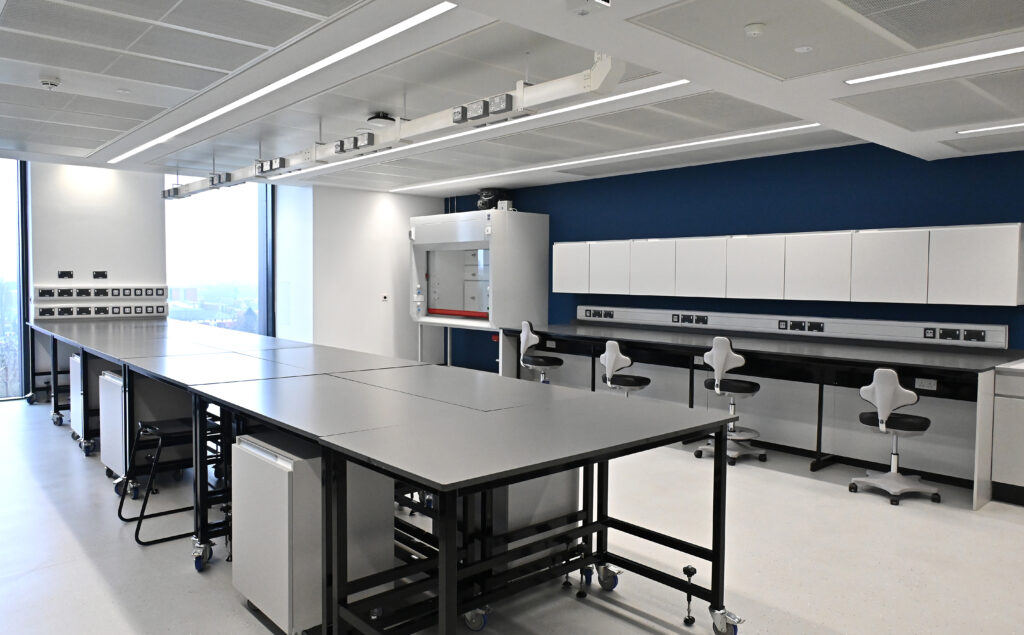
Lab space at PHTA Birmingham
Our labs are designed to support ambitious life sciences, biotech and medtech businesses at different stages of growth. We offer high-quality wet and dry lab environments – with flexible options including shared occupancy of labs – and access to a wider ecosystem focused on healthcare innovation and commercial success.