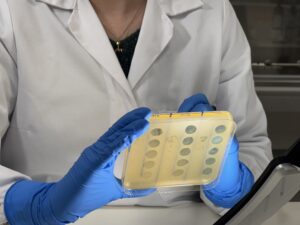
The award will fund a 30-month consortium programme bringing together PHTA-based Impli, Imperial College Healthcare NHS Trust, King’s College London, and Fertility Europe to take the BEAM biosensor from prototype to first-in-human clinical validation.
Impli, the deep-tech company developing the first continuous molecular monitoring platform for hormonal health at PHTA, has been awarded a £1.4 million grant from the National Institute for Health and Care Research (NIHR) Invention for Innovation (i4i) programme. The funding will enable Impli to progress its BEAM (Bio-Endocrine Analysis Monitor) minimally-invasive microneedle biosensing patch, through clinical validation for use in in vitro fertilisation (IVF).
The award was made in partnership with a world-class consortium including the Imperial College Healthcare NHS Trust Clinical Research Facility and Wolfson Fertility Centre, London Institute for Healthcare Engineering (LIHE) part of King’s College London, and patient advocacy network Fertility Europe, alongside specialist medical device manufacturer TTP.
Infertility affects one in six people worldwide. IVF is the most common form of assisted reproduction, yet success rates remain between 15-32%, and as low as 6% for women over 43, while each cycle demands up to 10 clinic visits for blood draws. Currently, clinicians make time-critical dosing and timing decisions based on hormone values that may be 24-48 hours old. Critical events such as luteinising hormone (LH) surges that determine egg release; progesterone dips that cause implantation failure; and early signs of ovarian hyperstimulation syndrome, are routinely missed by single-point tests, with real consequences for cycle outcomes and patient wellbeing.
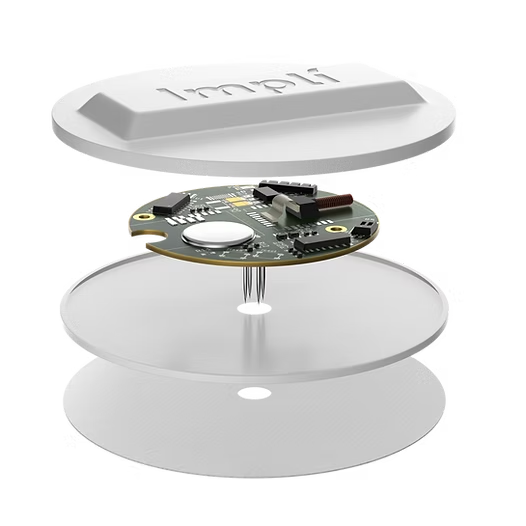
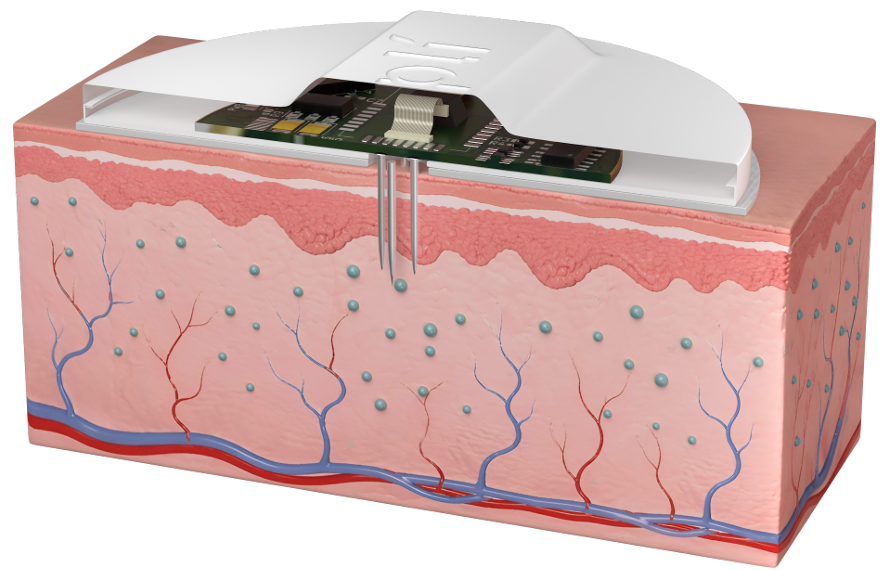
BEAM is a biocompatible microneedle patch worn on the upper arm. Aptamer-based electrochemical biosensors continuously measure estradiol, LH, and progesterone in interstitial fluid, transmitting data wirelessly to a smartphone where AI algorithms convert raw signals into real-time hormone trends.
BEAM is the wearable first step in Impli’s broader platform roadmap, with its longer-term vision focused around fully-implantable, long-duration monitoring, beginning where clinical need is most acute and the regulatory path most accessible.
By replacing up to 10 clinic visits with as few as 2, BEAM enables personalised, real-time protocol adjustment with the potential to meaningfully improve success rates and reduce preventable complications.
Anna Luisa Schaffgotsch, Impli’s Founder and CEO, said: “We are not just building a device, we are building the evidence base to show that continuous hormone monitoring is possible, clinically meaningful, and ready for the real world. With an exceptional consortium behind us, we now have the funding, the expertise, and the clinical pathway to do that properly. The NIHR i4i award is a pivotal moment for Impli and for continuous hormone monitoring as a field.”
Professor Gino Martini, PHTA’s CEO, said: “By focusing on patterns, rather than snapshots, Impli’s BEAM technology could be the most important development in infertility treatment since IVF itself over 40 years ago. What’s truly exciting about Impli is the sheer scope of its potential – from other women’s health conditions like endometriosis through to hormonally-driven cancers, this technology could touch hundreds of millions of lives around the world. We’re thrilled to be working with them.”
Mr Sotirios Saravelos, Consultant Gynaecologist and Reproductive Medicine Subspecialist, Imperial College Healthcare NHS Trust / Wolfson Fertility Centre, said: “Continuous hormone monitoring has the potential to change the landscape of fertility treatment, both in terms of clinical care and patient experience. Rather than snapshots taken at fixed points in time, with Impli we will have access to a live feed of each patient’s hormonal response, allowing us to personalise care in a way that has not been possible before. Furthermore, reducing the burden of the multiple hospital appointments for venipuncture, will be invaluable for our patients, who are in the majority, young, active and busy professionals. I am genuinely excited to be part of this programme and to help bring this technology into the hands of patients and clinicians at the Wolfson Fertility Centre. “
Dr. Valentina Vitiello, Head of Clinical Translation and Governance, London Institute for Healthcare Engineering, King’s College London, said: “”The London Institute for Healthcare Engineering was built to turn transformative medical technology into real clinical tools. BEAM is exactly the kind of innovation we exist to support, scientifically rigorous, patient-centered, and with a clear pathway to adoption. We are delighted to be part of this consortium and look forward to helping bring continuous hormone monitoring to patients who need it most.”