The University of Birmingham – which we’re part of – has always been a home to exciting innovations; a university of firsts. But developing a ‘blue sky’ idea into a commercial prospect is no easy task.
University start-ups and spin-outs have become big business, positively impact on the economy both at regional and national levels. The University of Birmingham is proud to nurture the type of innovations that can only originate from a university dedicated to research that is purposeful, pragmatic and pioneering – and the process of developing and delivering innovations with real-world application has been 125 years in the making.
Birmingham’s nickname, the “City of a Thousand Trades” came about during the Industrial Revolution when the city established itself as a major centre for industry and innovation. The founding of the University of Birmingham in 1900 crystallised this innovative spirit, tapping into and finding ways to advance the passion and potential of the city’s talented tradespeople.
While the city’s industrial base has evolved, the University of Birmingham continues to honour its civic commitment to drive progress via research that matters.
There are certain types of innovations that only come from a research-intensive institution like the University of Birmingham, where academics are on constant search for ideas that will change lives. Here, pacemakers and plastic heart valves were developed; the first artificial vitamin (Vitamin C) was synthesised; allergy vaccines were pioneered; the key components of artificial blood were synthesised; and the first clinical trials of the contraceptive pill outside the US were carried out.
All this innovation provides the opportunity for commercialisation, and according to the Russell Group, universities are a striking UK success story – their spin-out companies raised £1.66bn in equity funding in 2023, 9.54% of all equity funding raised by UK companies.
Spin-out 4D Medicine, for example, is commercialising a new class of liquid resins that can be 3D printed into complex shapes to help our bodies recover from a wide range of medical conditions. The company is developing implantable devices for use in soft tissue repair and orthopaedic applications and, as healing takes place, these materials are safely absorbed into the body and expelled via normal metabolic processes.
In early 2020, The Native Antigen Company, which was originally created in 2010 to capture knowhow and expertise embedded in another University of Birmingham spin-out, Hybrid Biosystems, was among the first companies in the world to make SARS-CoV-2 antigens commercially available for researchers developing diagnostics and vaccines. During the pandemic Birmingham researchers also ran genomic sequencing services to identify new strains of the virus; worked with industry to develop a test detecting antibody response to Covid-19 infection in people with mild disease; and engineered a new formulation for a nasal spray that delivers a physical barrier to viral infection.
Dr Ruchi Gupta’s game-changing mouth-cancer detection lollipop is one of the newest innovations to come into the public eye. This novel diagnostic for mouth cancer will be made from a novel smart hydrogel and the team aims for it to replace current painful, invasive, and time-consuming diagnostic procedures.
Birmingham’s health and life sciences district
The University’s commercialisation infrastructure is centred around University of Birmingham Enterprise, based at Birmingham Research Park, and PHTA, at co-located Birmingham Health Innovation Campus. This ecosystem provides natural grow-on space for spin-outs and start-ups, who can incubate at the BioHub Birmingham and then scale-up to take space within PHTA. This constantly evolving pipeline of ambitious young companies not only maximises collaborative opportunities, but helps to keep life sciences businesses in the region – creating skilled jobs and making significant contributions to the local economy.
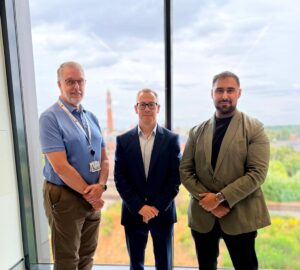
Professor Gino Martini, CEO of PHTA, said: “It’s vital that innovative companies are given the support they need to stay in the West Midlands region, and Birmingham’s health and life sciences district does just that. But we go far beyond offering premium Category 2 lab and office space – we catalyse collaborations by enabling access to clinical-academic experts who are leading their field, as well as providing opportunities to work together to maximise the potential of their innovations.”
David Coleman, CEO, University of Birmingham Enterprise, said: “Spin-outs are critical to the UK’s future economic growth, and our region, with its outstanding research facilities, has the capacity to become a leader in this space. Birmingham-born technologies can achieve global recognition, and we continue to contribute to initiatives that put the University at the forefront of entrepreneurial activity in the region.”
Businesses working with both University of Birmingham Enterprise and PHTA also benefit from comprehensive support from the earliest stages of innovation – from intellectual property protection to advice on investment and financing.
Gino concluded: “Our aim is to make it as easy as possible for our region’s entrepreneurs, spin-outs and growing businesses to find the talent, expertise and facilities they need to thrive – ultimately benefiting patients and our local communities.”